How to Train Your Dog at Home? (Complete Guide for Beginners)
Training your dog at home is one of the best steps you can take to improve your dog’s behavior, build a strong bond, and create a peaceful home environment. Many people think dog training requires professional help, but the truth is that most training can be done easily at home with patience, consistency, and the right techniques. Whether you have a playful puppy or an adult dog, this guide will help you train your dog confidently and effectively.
Understanding Your Dog’s Nature
Before training begins, it’s important to understand your dog’s personality. Every dog learns differently. Some are energetic learners, some are calm, and some take more time to understand new commands. Age, breed, and temperament all affect learning speed.
A puppy has a short attention span and needs short, fun sessions. Adult dogs have longer focus but may have habits that need correction. Understanding your dog will help you choose the best training style.
Basic Training Rules
Effective dog training depends on three major rules:
1. Be Consistent
Use the same command words every time.
If you say “Sit” once and “Sit down” next time, the dog gets confused. Clear and simple words work best.
2. Use Positive Reinforcement
Dogs learn fastest when training feels rewarding.
Use treats, praise, toys, or gentle petting to encourage good behavior.
3. Keep Sessions Short
Dogs don’t learn well when bored.
Keep each session 10–15 minutes to maintain interest.
Teaching Basic Commands
Basic obedience commands are the foundation of all dog training.
Sit
- Hold a treat close to your dog’s nose.
- Move your hand upward.
- As the dog naturally sits, say “Sit.”
- Reward immediately.
Stay
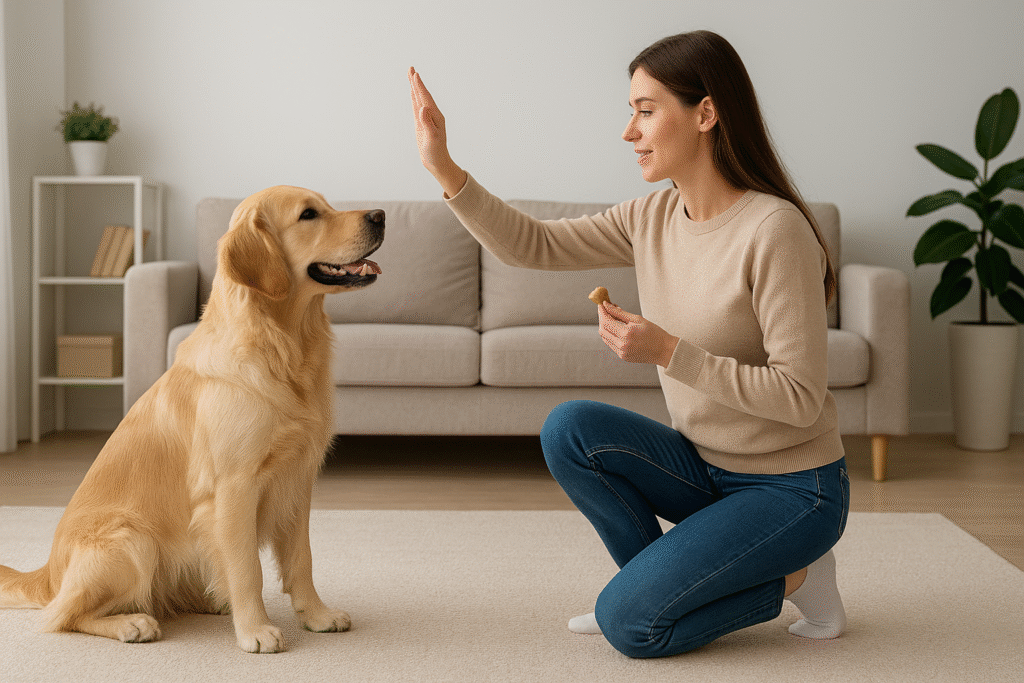
- Ask dog to sit.
- Show your palm and say “Stay.”
- Step back slowly.
- Reward even if the dog stays for 2–3 seconds.
Increase duration gradually.
Come
- Put your dog on a leash.
- Gently pull and say “Come.”
- When the dog comes, reward warmly.
This command is important for safety.
Down
- Move a treat from dog’s nose to the floor.
- When the dog lies down, say “Down.”
- Reward instantly.
No
Use a calm but firm voice to stop unwanted behavior.
House Training / Potty Training
Potty training is often the biggest challenge for new dog owners, but a routine makes it simple.
Steps to Follow:
- Take dog outside every 2–3 hours.
- Always go after meals, naps, and playtime.
- Choose one specific bathroom spot.
- Use the command “Go potty.”
- Reward right after your dog finishes.
If accidents happen indoors, don’t punish your dog.
Clean the area and continue training.
Crate Training (Optional but Very Helpful)
A crate provides a safe, personal space for your dog and helps with potty training.
How to Crate Train:
- Keep the crate open in the beginning.
- Add a blanket and toys inside.
- Let the dog enter freely.
- Start with 5–10-minute crate sessions.
- Slowly increase time.
Never use the crate as punishment.
Leash Training
Teaching your dog to walk calmly on a leash prevents pulling and improves outdoor control.
Follow these steps:
- Start indoors with fewer distractions.
- Reward when the dog walks beside you.
- If the dog pulls, stop walking.
- Move only when the dog relaxes.
This teaches your dog that pulling doesn’t work.
Fixing Bad Behaviors
Excessive Barking
Find the cause—fear, boredom, excitement—and correct it with commands or distraction.
Chewing
Provide chew toys.
If the dog chews on something wrong, say “No” and replace with a toy.
Jumping on People
Ignore until the dog calms down.
Reward only when the dog stands with all four paws on the floor.
Socialization
A well-socialized dog is confident and friendly. Introduce your dog to:
- People
- Other dogs
- Children
- Parks
- New sounds
- Car rides
- Different environments
Every new experience should be positive and slow.
Make Training Fun
Training should never feel like a burden.
Make it enjoyable with games like:
- Fetch
- Tug-of-war
- Hide and seek
- Puzzle toys
A happy dog learns faster.
Conclusion
Training your dog at home is simple when you follow the right approach. Start with basic commands, build a routine, use rewards, and stay patient. With consistent daily practice, your dog will become well-mannered, calm, and confident. A trained dog is not only easier to manage but also happier and healthier.
